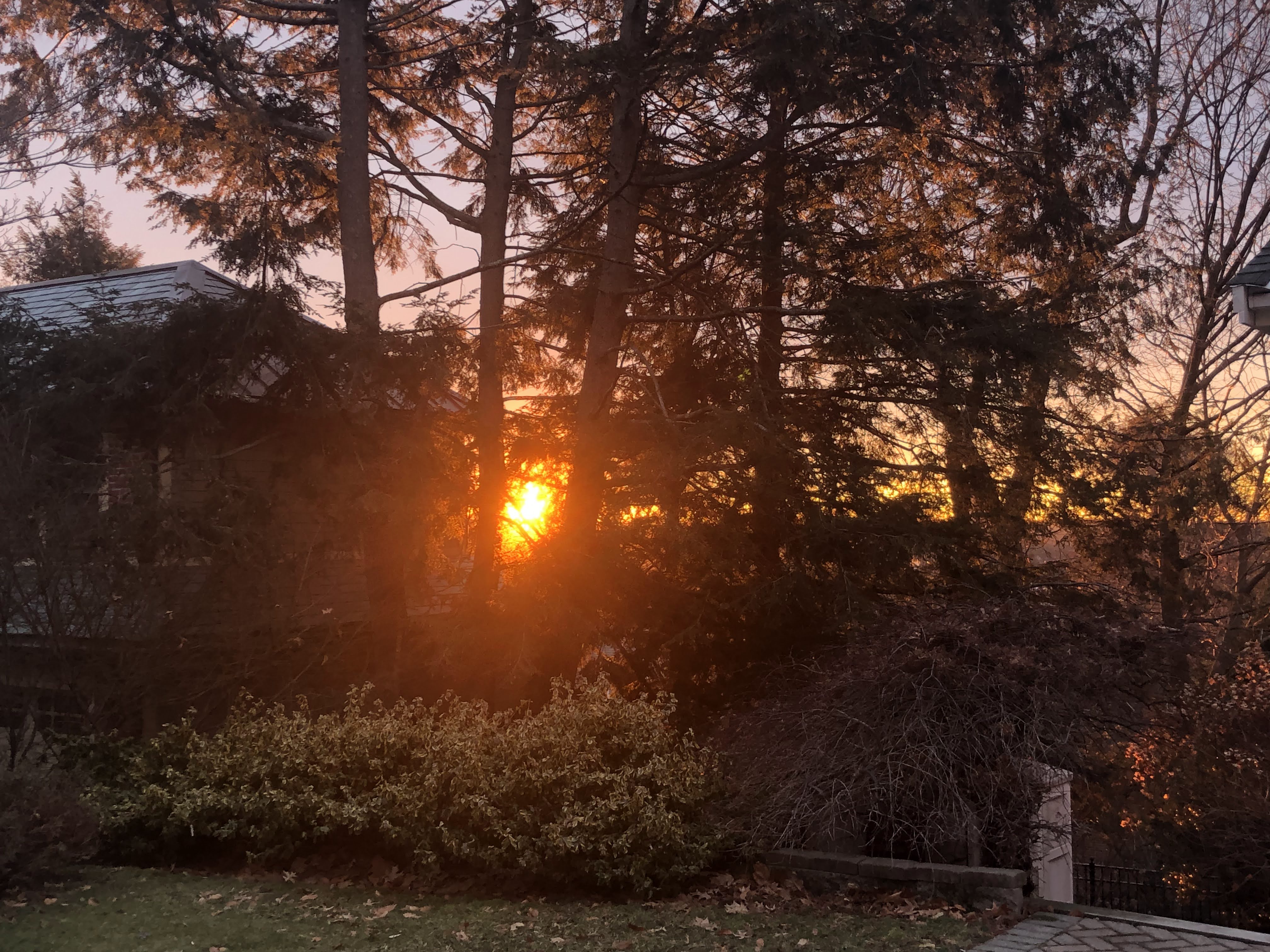
In six days, so the Bible says, God sang creation into being. On the seventh day, God listened.
Over the past ten years, I have journeyed through studying music, living in religious communities, practicing pilgrimage, and beginning theological studies, all in unfolding response to a call to listen. I have been seeking to obey a voice I heard all those years back, a voice that interrupted my rolling script to say, the miracle is here and now, you only have to listen.
I studied listening as a classical musician, day after day in the practice room, accompanied by quiet. I learned to listen to the religious texts of my tradition and others, to love the Tao Te Ching and the Bhagavad Gita. I increasingly listened to the wilderness of my own heart as I walked the labyrinths of life, alongside friends and mentors. Summer 2016 found me listening to chants, silence, and a call to solidarity in the Church of Reconciliation at Taize. 2017 and 2018 were years of listening through communal life and silent retreats. I came back to the US in listening to a call to be healed and take care of myself, then listened to the voice of a mentor who encouraged me to pursue my quest and questions through theological study. On a three month pilgrimage in 2020, before the Covid shutdown, I sat in monasteries–Catholic, Episcopal, Buddhist–and listened to the age-old prayers that seemed a container for some deeper Silence.
All along, the call to listen has drawn me.
Here, halfway through my MDiv program at BU School of Theology, I find listening hard. I notice this in the tense energy of my commute between different ministry placements and in the stacks of emails I dread getting through. I notice it most profoundly when one near emergency after another reveals the truth that I am going too fast.
It is in this moment that I receive a unexpected email. A course for which I had tried to register but had only managed the waitlist, “Sabbath: Theology and Practice,” has an opening. What timing.
As I begin to dig into the readings on the theology of Sabbath, the Jewish tradition of Shabbat observance and Christian ways of honoring the command to rest, I am brought back to a course I took in undergrad called “Music and the Mystical Experience.” Amid all the music classes at the fast-paced conservatory, this class taught us to pay attention to the rests in the music, the silence that holds it all together. A poem I encounter now beckons me back to that time of discovery.
In “I Go Among Trees,” Wendell Berry writes:
I go among trees and sit still.
All my stirring becomes quiet
around me like circles on water.
My tasks lie in their places
where I left them, asleep like cattle.Then what is afraid of me comes
and lives a while in my sight.
What it fears in me leaves me,
and the fear of me leaves it.
It sings, and I hear its song.Then what I am afraid of comes.
I live for a while in its sight.
What I fear in it leaves it,
and the fear of it leaves me.
It sings, and I hear its song.After days of labor,
mute in my consternations,
I hear my song at last,
and I sing it. As we sing,
the day turns, the trees move.
“I hear my song at last, and I sing it.” That was how I had felt throughout “Music and the Mystical Experience.” It was a class about listening contemplatively, listening from the heart and to the heart. In a kindred spirit, the Sabbath course unfolds.
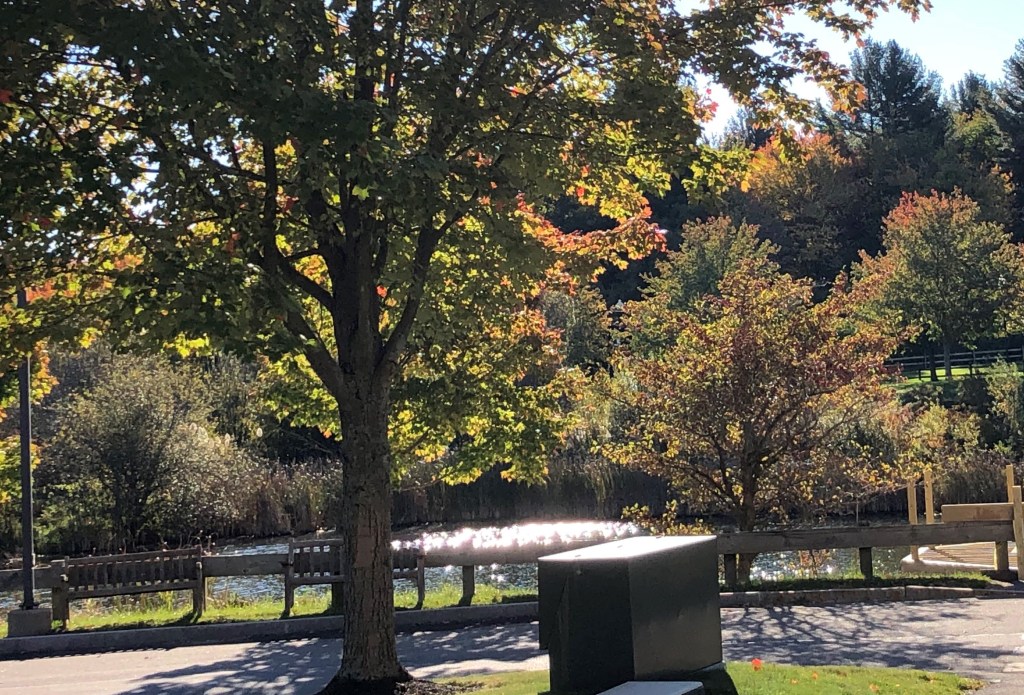
Traditionally, Shabbat is a day set apart to rest and celebrate life together in community, remembering God as creator, liberator and sustainer. It is a reorientation to our human place in the world, to our connection with God, one another and nature.
As a day of rest, work is traditionally prohibited, though this command is interpreted in many ways by different Jewish traditions and individuals today. Ancient rabbis understood the “work” that was prohibited on the Sabbath as any human action that altered nature (Andrea Lieber, Jewish Prayer and Practices, “Chapter 10: The Flavor of Shabbat,” page 126. For more information, see this and all other sources listed in the Bibliography at the bottom of the page). As I read this and reflected on how we impose ourselves on nature today, I was reminded of the mission of acoustic ecologist and silence activist Gordon Hempton.
Gordon Hempton lives out a call to be “the soundtracker,” listening to and recording natural soundscapes all over the world. One highlight of his mission is to preserve one square inch of silence in the Hoh Rainforest of Olympic National Park, Washington. Maintaining the boundaries of this square inch is challenging; it is situated miles away from most human activity, but noises of aircraft overhead or foresters working can easily penetrate the soundscape. The silence he seeks is so much more than an absence of noise: it is the “presence of everything.” It is a quality of attention that enables us to hear earth as a “solar-powered jukebox.” Hempton’s book One Square Inch of Silence details his exquisite attention–his wonder and awe–at becoming part of the wilderness, as does his interview with Krista Tippett from On Being.
As I read Sabbath scholars on the importance of setting boundaries around our sacred times and spaces, I think of Hempton setting aside his square inch. As I explore Sabbath as a celebration of the goodness of creation, and God dwelling in it, I hear Hempton’s loving attention to the sounds of the earth.
During our “Music and the Mystical Experience” course, we were introduced not just to Hempton but to some of his practices of being. We learned to cultivate quiet through meditation. We took listening walks along the streets of Appleton and the Fox River. I wonder now, how can these practices, inspired by Hempton, become practices of Sabbath?
I find boundless channels of resonance between Hempton’s world of acoustic ecology, and theologies of Sabbath. Here are four of those notes together in harmony, explored through the resonant voices of poets, musicians and theologians: Community, Listening, Resistance, and Holy Place. This serves as the foundation for my experiential project, a challenge to pause my headphones and radio for one week and take in the acoustic environment.
Below these four notes of resonance between Sabbath and Acoustic Ecology, you will find eight blog posts with journal entries, sound clips and photographs from my week of “open-eared sabbath.” I welcome you into this exploration, and would love to hear your own reflections on pausing and listening. I invite you to add your comments below and get the conversation started!
I. Community / “Everything which touches us, you and me, together — like a single bow, drawing out from two strings but one voice. O song of songs!”
“Like a single bow, drawing out from two strings but one voice,” sings Z. Randall Stroope’s musical setting of “Love Song,” by Rainer Maria Rilke. This love poem plunges beneath affection, into contemplating the interconnectedness of all being: “On which instrument are we strung? And which violinist holds us in the hand?”
Sabbath is a time set apart, but not for isolation. Sabbath calls us to hear our resonance amid those strings of the web of being. Dorothy C. Bass meditates on this interconnected reality in the chapter “Keeping Sabbath” (see this chapter, and all other works referenced, listed at the bottom of the page in the Bibliography). Community is at the heart of Sabbath keeping. While solitary prayer and reflection can be crucial nourishment for the soul, a Sabbath understanding is that such solitude participates in and flows from our fellowship with God and one another. Bass calls Christians who are seeking Sabbath practice into celebrations of communion, literally and metaphorically (page 15).
One way to conceptualize Sabbath relationally is through the lens of “conversation,” writes theologian Nicola Slee. In the chapter “It sings and I hear its song: The invitation to encounter,” from her book Sabbath: The Hidden Heartbeat of Our Lives, Slee describes Sabbath as space for wide, inclusive conversation. This is inherent in the Jewish Shabbat traditions of sharing family meals and time together. Slee writes that conversation fosters unexpected exchange, follows no script, includes as many as join in, and allows for “the meeting and intermingling of apparently unrelated fields or questions that can lead to the creative frisson of new thoughts.” Conversation has the power to express and create relationship, especially across difference.
This theology of conversation parallels the acoustic field of resonance. In his book Ecologies of Resonance in Christian Musicking, theologian and musicologist Mark Porter uses resonance as a basis for approaching sound; it “enable[s] a certain kind of attentiveness to dynamics of sonic and more-than-sonic interaction” (22). Resonance is a broad playing field that reveals conversations occurring between human, animal, natural and industrial noises in any given environment, on sonic, social and spiritual levels.
The concept of resonance broadens our definition of conversation beyond human parameters. Sabbath becomes a call to attend to the conversation of all creation, to which we are indelibly tied. Pausing our recorded sound may be a break from human conversation in order to remember our place in the conversation of all being. Instead of imposing our soundscape on where we are, we learn to accept, even to love, the pulse of our neighborhood. Putting down headphones as a Sabbath practice invites us to listen to those we share our homes with, from humans to birds to trees.
And yet, we hold the tension that technologies can also tether us to our communities. As Elizabeth Drescher proposes in the article “Turn Off, Slow Down, Drop In: The Digital Generation Reinvents the Sabbath,” rather than an extremism of banning technology, what we can hope to cultivate is attentiveness to our relationships with technology and one another. She advocates practices that liberate us from the soul-draining aspects of technology, so that we can celebrate its power for connection. There is no singular way to unplug or plug into community, but I offer the conviction that our acoustic surroundings are worthy of our attention and investment.
II. Listening: “And it’s always being now / and it’s always being now / It’s always now / Can you feel the silence?”
Van Morrison’s track “On Hyndford Street,” from the album Hymns to the Silence, pays homage to quiet. He reminisces on summer nights and Sunday mornings on Hyndford Street, where he could feel the silence. This quality of silence was not only present in the absence of sound, but within the conversations, within the music, within the tastes and smells and moments of contemplation. The song’s repetitive lyrics draw us into a listening that permeates the entire experience. “Can you feel the silence?“
With a similar kind of loving attention, Abraham Joshua Heschel depicts Sabbath as “the presence of God in the world, open to the soul of man” in his landmark book The Sabbath (64). To observe the Sabbath is to become aware of and delight in this presence. This practice trains us in the spiritual purpose of life, which is not to amass information or material goods, but “to face sacred moments” (15). Sabbath is not a call to fill our time, but to become attentive to the way God’s presence already fills it. The Sabbath is set apart, but teaches us to sense God’s love at work within the world (72). Reading Heschel, it is clear that this text comes from a lifetime of devotion to and practice of loving the Sabbath–of practicing presence.
Theologian Jürgen Moltmann also writes from a deep sense of God’s presence in the world on the Sabbath. He describes, “in the Sabbath, God takes joy in creation, resting in it, becoming “receptive for the happiness, the suffering and the praise of [God’s] creatures…on the sabbath the resting God begins to ‘experience’ the beings [God] has created” (279). It is not just creation that experiences God’s presence on the Sabbath, but God who experiences and enjoys the presence of creation. God “allows creation to act” on God. Herein is the invitation to a deep mutual listening.
Heschel and Moltmann portray a deep sense of attention to the presence of God in the present. The Sabbath makes accessible an eternal now. Unplugging from recorded sounds can be a profound experience of stepping in to this present moment. As Heschel describes, it is not something we can hold onto or gain, but it is a moment for encounter. This present moment is sacred.
From Heschel and Moltmann’s attention to presence comes a theology of listening. Sabbath is not about creating something new, but listening to what is: to the innate goodness of God, creation, ourselves. Of course recorded sounds can be a powerful reflection of this goodness, and yet we ought to remember that we need nowhere other than the present moment to experience God.
III. Resistance: “perhaps a huge silence might interrupt this sadness”
Pablo Neruda’s poem “Keeping Quiet” portrays silence as a resistance to violence. It is an equalizer that wants “no truck with death,” but seeks instead a life worth living, for all people. The penultimate stanza is particularly striking:
If we were not so single-minded
about keeping our lives moving,
and for once could do nothing,
perhaps a huge silence
might interrupt this sadness
of never understanding ourselves
and of threatening ourselves with
death.
In his book Sabbath as Resistance: Saying NO to the CULTURE OF NOW, Walter Brueggemann argues that Sabbath practice is resistance to the oppressive dominant culture. Brueggemann contrasts God’s liberative command to observe the Sabbath with Pharaoh’s compulsion for unceasing work. He parallels our contemporary capitalistic culture with the culture of Pharaoh, a culture that tells us we are never enough and never worthy of stopping. God objects: we are very good as we are, and we can honor this fundamental goodness by honoring God’s command to rest.
Our addiction to noise feeds our compliance with capitalism’s soul-sucking demands. We are bombarded with advertisements, while pressured to choose the most educational and edifying sound bytes to consume. We are consumers of sound who are also consumed by it. Brueggemann clues in on anxiety as a main facet of our lives that requires resistance; this anxiety is ever-present in the way we run from and block out noises that disturb us, while masking them with noises that soothe, comfort and hopefully “improve” us.
We don’t need continual improvement. That is Pharaoh’s model. What if we were to take a day off of consuming recorded sound, manipulating our environments, searching for the next podcast or TedTalk, and just be?
IV. Holy Place: “in my quiet place, everything is quiet”
In my quiet place everything is quiet.
-Mary Whitney, a third-grade student
Quiet as the butterfly on silent wings.
Quiet as a leaf falling through the air.
Quiet makes me feel like
I am the only one on earth.
The first to find this wonderful feeling inside me.
Joan Szymko’s musical setting wraps a halo of tender sound around Whitney’s profound text. It accentuates the feeling of quiet as a sacred place: a place not only referenced by the words, but now embodied in the music.
Sabbath is above all a sanctification of time, as Heschel writes in The Sabbath. But as humans, we experience time in place, and so Sabbath is also a call to uphold the sacred boundaries of our most beloved places. One vibrant example of this is Su Yon Pak’s description of Korean American practices of Sabbath. In the chapter “This is the Day: The Practice of Keeping Sabbath,” Pak explores the importance Koreans place on encountering God in places set apart, from mountains to springs to sanctuaries (21). We might take this as an invitation to connect with those “thin places” where we more readily encounter God, perhaps venturing into the woods to hear the voices of the trees, as Berry does in his poem from “Sabbaths” (above).
Just as Hempton vies to protect his square inch of silence, setting aside a place as holy may help us pay deeper attention to the presence of God. Nicola Slee calls us to attend to the boundaries between the “fields” we cultivate and the “woods” that are free in the second chapter of her book on Sabbath (Chapter 2: “I go among trees”). Paradoxically, we need to set boundaries around those wildernesses of land and heart wherein the boundaries between death and life, wild and holy, bleed together. While we may take initiative in establishing the boundary, it is all about leaving space for that which is beyond our control, beyond our understanding, to nourish us.
We protect the wilderness when we strip our ears to listen to it. We let go of the cultivated sound of headphones to let the rambling, rumbling noises of our environments reach us. We may be disturbed by what we hear, but that must activate us to change the soundscape. If we realize that we are surrounded by constant noise and frenetic energy, imagine the stress our bodies are taking in. Can we imagine a different reality?
Sabbath is not a dreamworld, but an envisionment of God’s Kingdom in the now. It is not just a time of rest but of prophecy and activation, as Ana Lyons-Levy writes in her article “Sabbath as Political Resistance:” “Each person who keeps a Sabbath plays a part in exposing the underlying ideology of the status quo–the religion of materialism, the self-advancement, and the pursuit of individual happiness” (66). Our time whiled away on the “playground of life” (67) awakens us to the essence of our existence: we enter the coming week not just rested, but more alive.
Our sacred places teach us that all places are sacred; our Sabbath from imposed soundscapes teach us to become painfully open to all our soundscapes: what they have to teach us, and how we are called to become music-makers singing our songs within them.
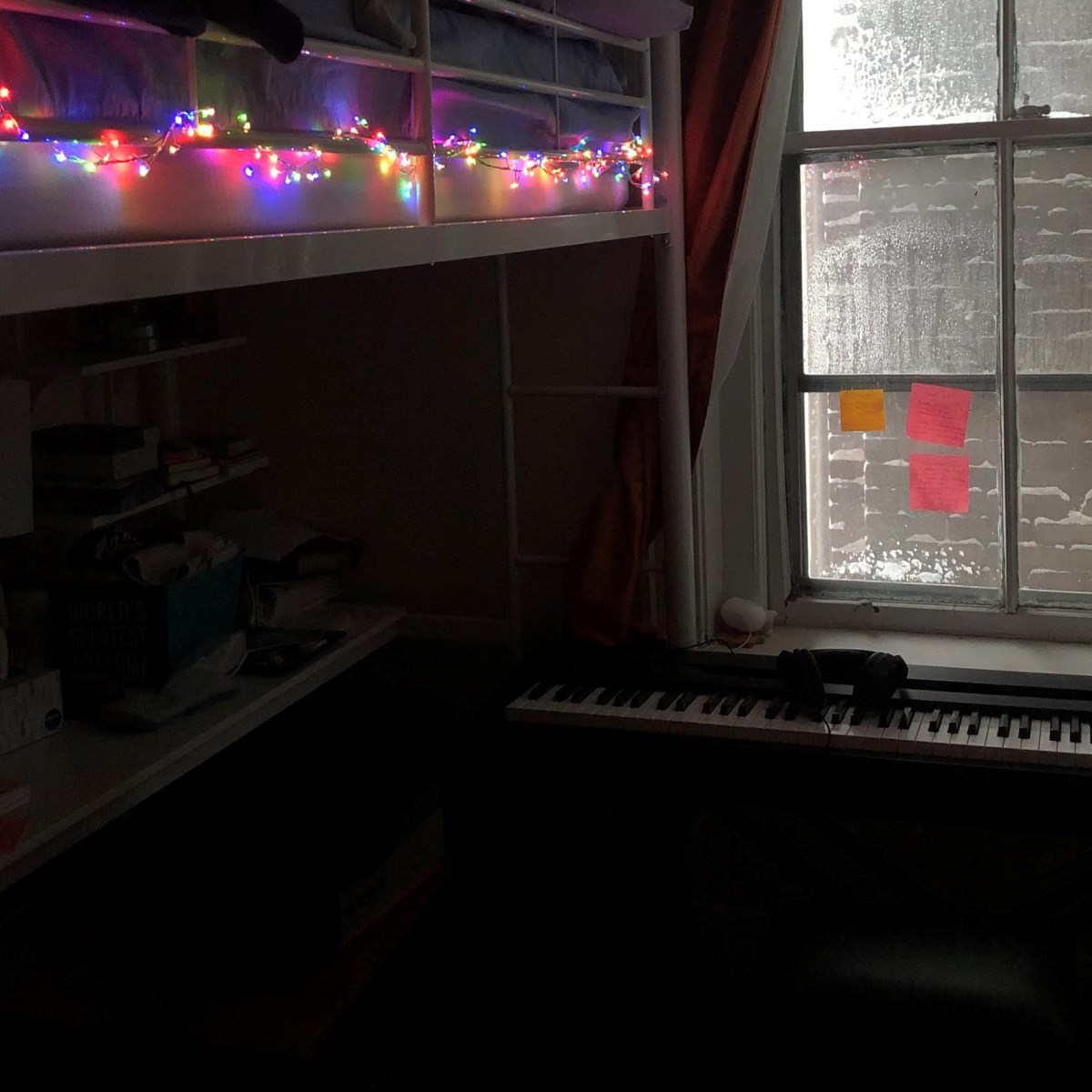
Sabbath Day I
This is the first post of my “Open-Eared Sabbath” series, where I share journal entries, soundscape recordings and photos from my week free from headphones. I am taking a Sabbath from recorded sound so I can stop wondering and planning what I ought to be listening to at any given moment: What music will put…

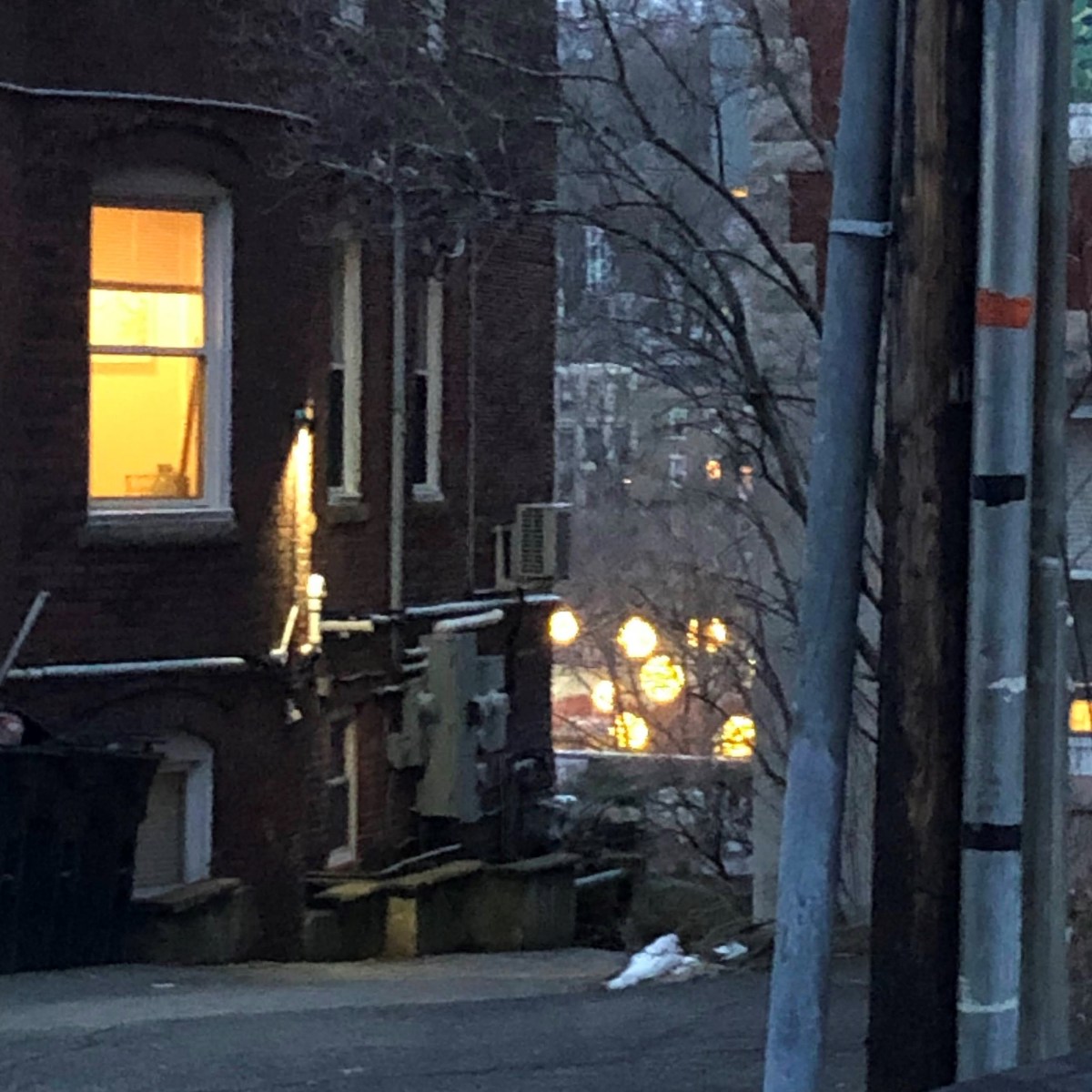
Sabbath Day II
I don’t want to drown out the quiet. It is my companion, one of my oldest friends. It is almost a place: a place where I can pick things up, and put them down, and let them be. A place I am part of: not the director or designer, no special role except to delight.…
Sabbath Day III
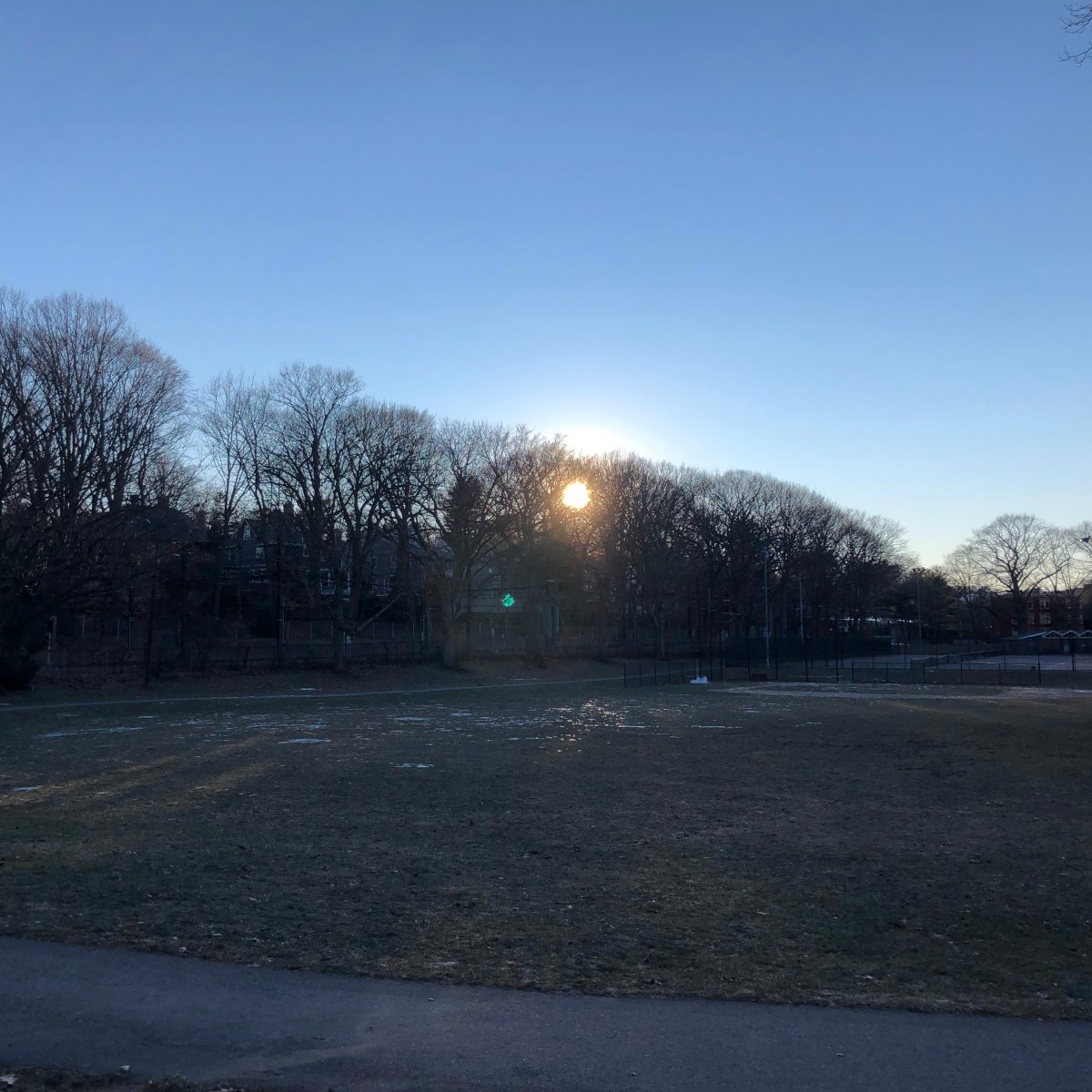
Today was an adventure. Clockwise from top left: wandering through Boston Public Garden, enjoying the sounds of the T, catching the late afternoon sun at Dean Road Park in Brookline. Day 3 of my “open-eared Sabbath” project. I may have never noticed those leaves in the park, those few beautifully wilted leaves who were still…
Sabbath Day IV
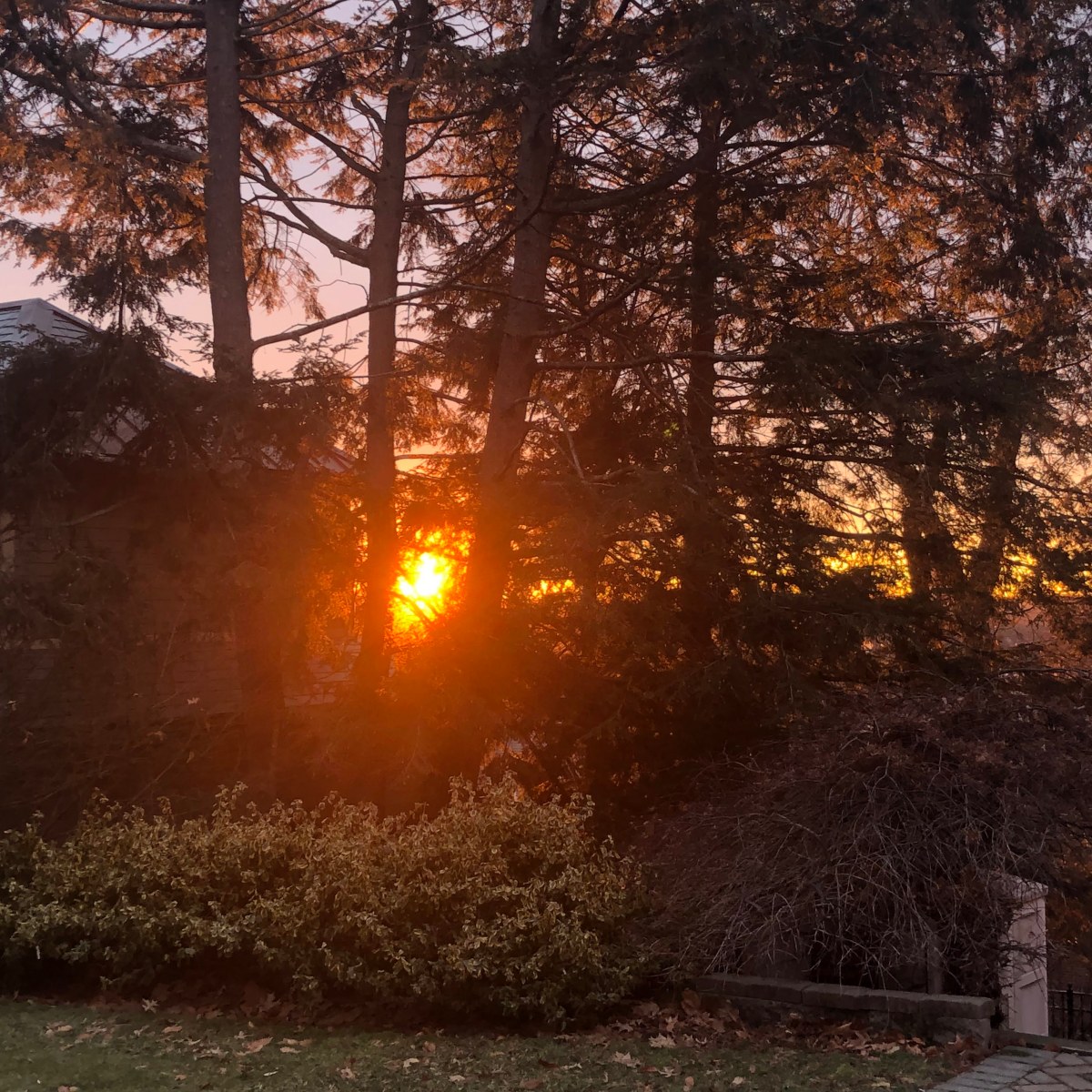
Sunrise in Brookline This morning, I thought I was going to miss the sunrise but I didn’t. It surprised me. It overtook me, as much as I was trying to overtake it. There’s something important I’m here to do, and I need to be here for it, all of me. Present to it. Present to…
Sabbath Day V
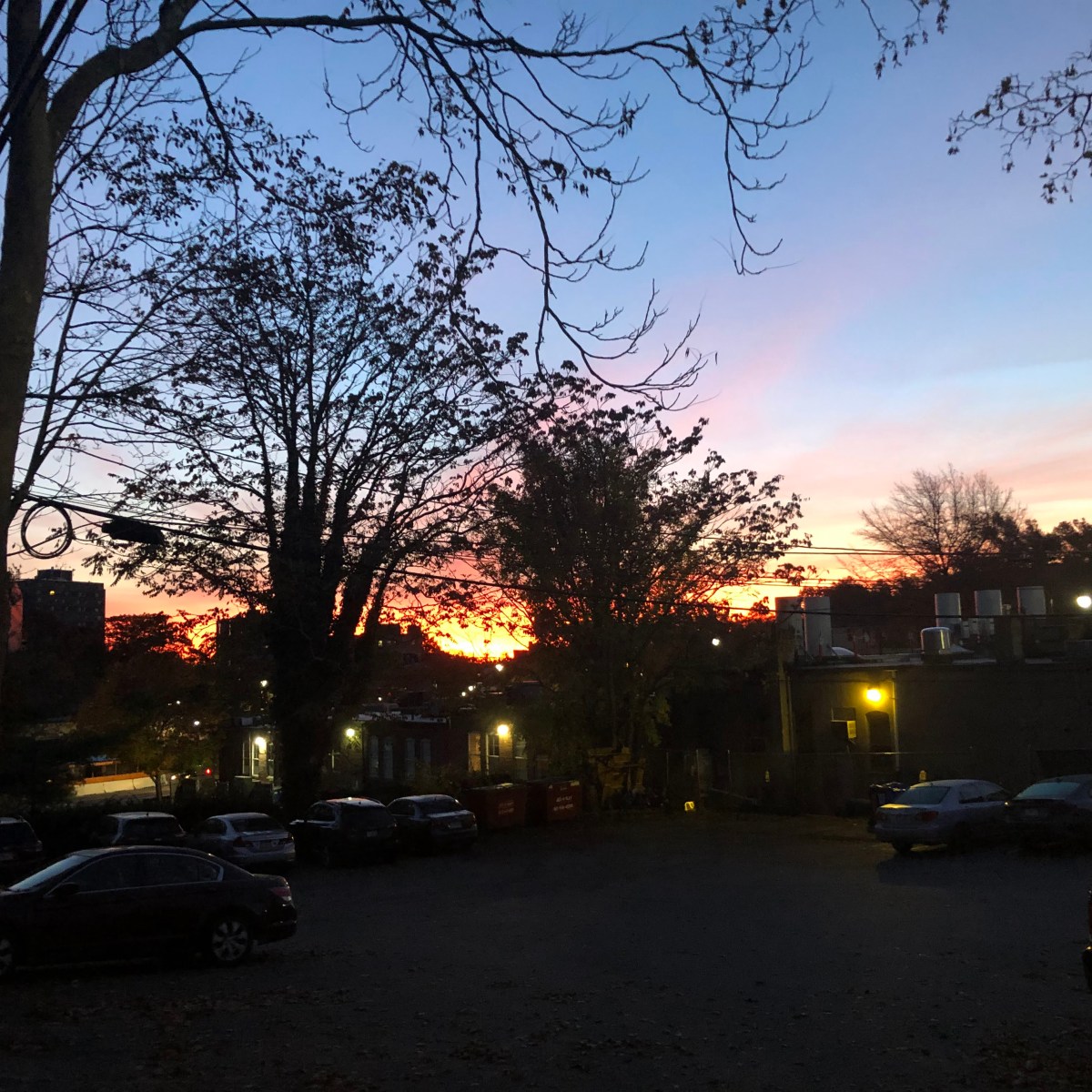
I spent a lot of time in the car today, and that’s where I found most of my quiet. Here’s the parking lot at sunrise. Today I found how terrified I am driving. I didn’t block it out at all with the radio. I was just there with it, and the roads, every inconsistency in…

Sabbath Day VI
After a week without much recorded music, I am so alive to the sound of the organ. I weep at the majesty into which I’m folded. I lie on the floor and let the vibrations wash over. And I journal: What happens when I realize that all I have longed for all along, I already…

Sabbath Day VII
I’m now sitting in the library at BU. Minutes ago, a squirrel posed, elegant and proud, for me–for the world. Can you feel the silence? Can you feel the listening? Attachment to my devices blocks me from feeling the silence. But outside, by the frozen river where the branches rested and the geese sat, I…
Sabbath Postlude
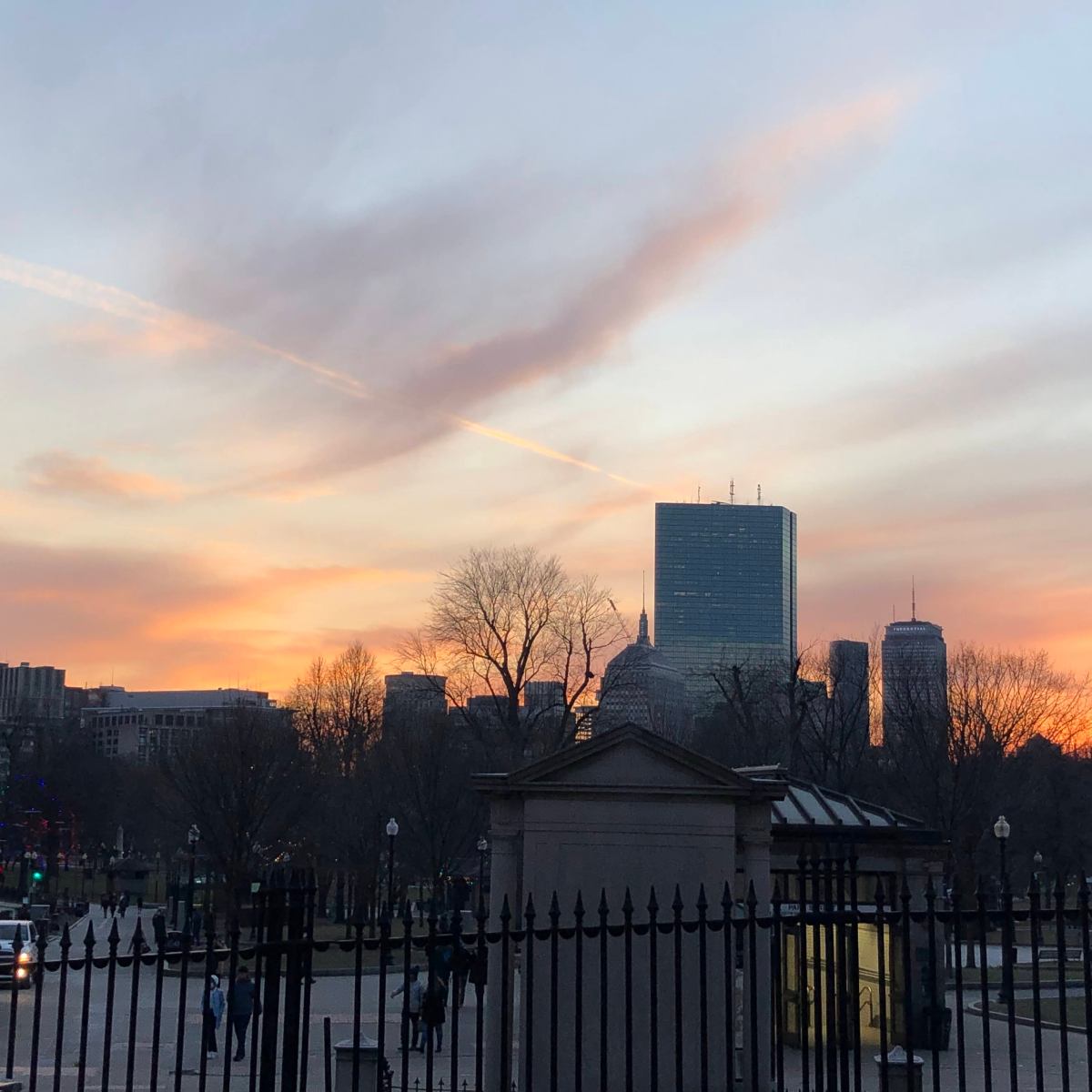
It has been seven days without headphones, without radio, without much recorded sound. I want this quiet, this listening, to continue. I stay without radio for an eighth day, and write: Today the car ride home from work was precious. I had this sense, with the radio off, that I was truly enough–that we are…
Bibliography
Bass, Dorothy C. “Keeping Sabbath.” Ch. 6 in Bass, ed., Practicing Our Faith. San Francisco:
Jossey Bass, 2010 (second edition).
Brueggemann, Walter. Sabbath as Resistance: Saying No to the Culture of Now. Louisville,
Kentucky: Westminster John Knox Press, 2014.
Drescher, Elizabeth. “Turn Off, Slow Down, Drop In: The Digital Generation Reinvents the
Sabbath.” Religion Dispatches, February 25, 2011.
Hempton, Gordon with John Grossman. One Square Inch of Silence: One Man’s Quest to Preserve Quiet. Atria Books: 2010.
Heschel, Abraham Joshua. The Sabbath. New York: Farrar, Strauss, and Giroux, 1951.
Levy-Lyons, Ana. “Sabbath Practice as Political Resistance: Building the Religious
Counterculture.” Tikkun (2012) 27 (4): 16-67.
https://read.dukeupress.edu/tikkun/article/27/4/16/91497/Sabbath-Practice-as-Political
ResistanceBuilding
Lieber, Andrea. The Essential guide to Jewish Prayer and Practices. New York: Penguin Group,
2012. Chapter 10, “The Flavor of Shabbat.”
Moltmann, Jürgen. God in Creation: An Ecological Doctrine of Creation. London and San Francisco, 1985.
Pak, Su Yon. “This is the Day: The Practice of Keeping the Sabbath.” Pages 17-24 in Pak et al.: Singing the Lord’s Song in a New Land: Korean American Practices of Faith. Louisville, Kentucky: Westminster John Knox Press, 2005.
Porter, Mark. Ecologies of Resonance in Christian Musicking. Oxford: Oxford University Press, 2020.
Slee, Nicola. Sabbath: The Hidden Heartbeat of Our Lives. London: Darton Longman & Todd Ltd, 2019. Kindle version.
 Sing a New Song