Like children

I ended up at my cousins’ house for a couple minutes the other day, looking for a pie server, of all things.

Seek and ye shall find…

But I suppose I hadn’t even know what I was looking for. Exhausted from work at school and then the dry cleaners, and on my way to the next activity, I didn’t know how badly I needed the healing touch of a three-year-old.

She met me with her wispy hair and ebullient smile in the driveway. She was eager to get back to her big brother, who was playing in the bushes.

“What’s he doing?” I asked.

“I dunno…COME ON!”

Her small but mighty words pointed me to Christ, and the mystery of the empty tomb.

“Where is he?” the disciples had wondered. Yes, Peter and John ran towards the emptiness of the tomb. But the overwhelming sense I get of the disciples (and often myself) post-Resurrection is the arrival of a great fear of the unknown.

“Unless you change and become like little children, you will never enter the kingdom of heaven,” Jesus himself says in Matthew 18:3. Through the revelation of holy wonder that came through my cousin’s eyes, I got a glimpse of this change of heart.

To be free to explore the unknown, knowing it’s in uncertainty that we meet and welcome Christ. To be unashamed of our limitations of knowledge and unafraid to be changed by the newness of life that meets us next. To desire being together in the breaking of the bread, though it never breaks exactly the same way twice.

“I don’t know…come on” is such a basic instinct in my small cousin but such a stretch for me. As I finish my job at the school tomorrow morning (hmm I am supposed to be grading right now but this seemed important), I approach my fear of the empty tomb. Would that this is the road to Emmaus, my cousins’ driveway, and that I can welcome the inevitably unexpected presence of Jesus in the stranger (or three year old) I didn’t know I needed.

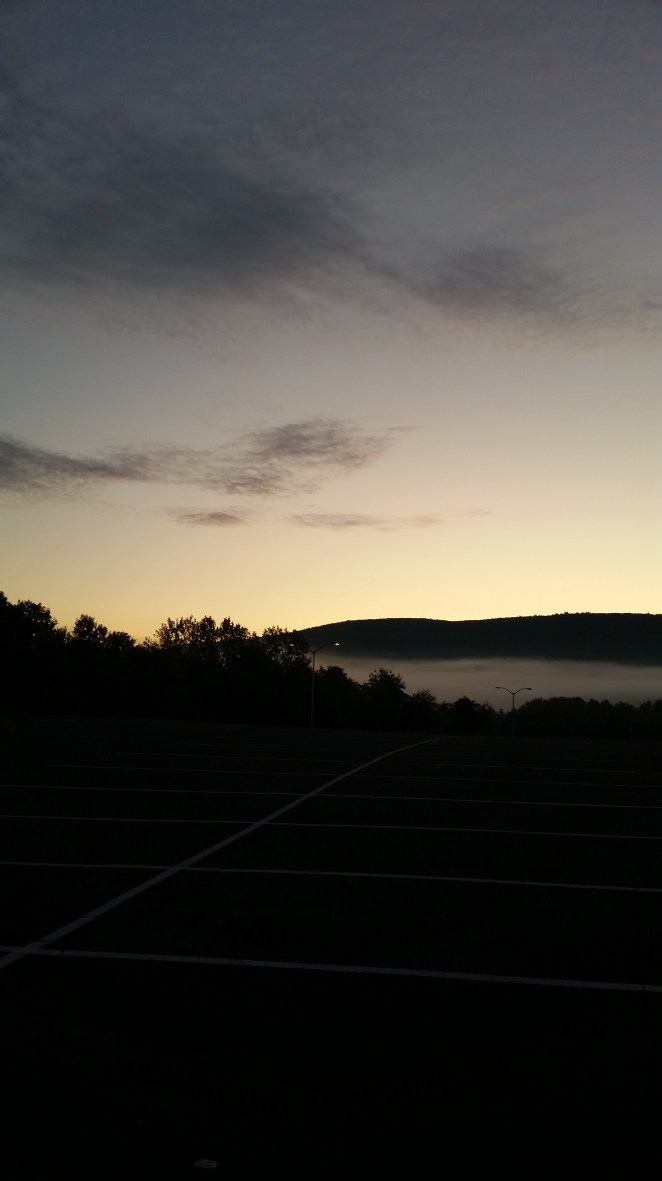
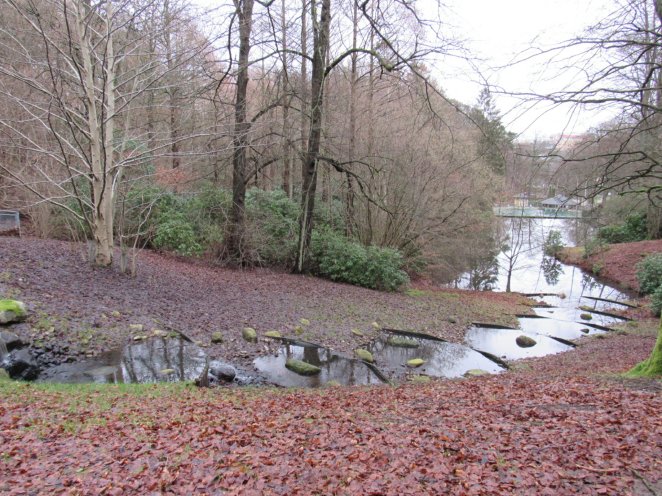
For now, I set out to enjoy my last foggy morning drive past the cows and wild turkeys, to the parking lot that also knows how to welcome each uncertain day. 20190926_064030

another crossing

cross reimagined

I never cease to be amazed by the endless possibilities for contemplating the cross.

I received this image the other day in an email meditation from Henri Nouwen, focused on encouraging us to receive the love of God.

I wonder if sometimes we get so caught up in what Jesus gives on the cross, however we name it–
(mercy
love
forgiveness
atonement (at one-ment)
justification… the list is unending, the meanings themselves beyond confine…)

that we miss the dimension of what Jesus receives on the cross, his arms open wide. He receives God’s love and forgiveness for all people, for all time. He in his woundedness, not pushing through by the strength of his moral compass, but broken, bruised, despised, rejected–
thirsty, abandoned, finished.

Ready to receive the love of God. Ready in his dying body to make manifest whatever is left in the universe when human hope has utterly died. Losing his life to be found. Only Jesus, who remains free from the lie of separateness from God, can lose it all.

Arms stretched open, he embodies the non-distinction between giving and receiving. He is the Way, a way beyond the bounds of certainty and security. And justification:
not to be holding on to the “right” thing at that moment of dissolution, not to be holding on at all–
to receive and be received by the One who Is beyond what I am.

un/raveling

define “ravel”
“Ravel is an interesting verb, in that it can both mean ‘tangle’ and ‘untangle’…as threads come unwoven in a cloth, they become tangled on each other”

Somewhere between the immanence and ineffability of God must be a place where the apparent unraveling of life all around us…
friends lost, marriages undone, breakdowns and heartbreaks…
is known by the other side of the coin, a raveling of sorts.

I am taken today by the lack of distinction between “raveling” and “unraveling,” since ravel in itself is a tangling and untangling. I am reminded that somewhere within all this unraveling is the touch of God spinning what is to come into its newness.

At the heart of all things…

My friend Valerie died on a Friday.
I had been sitting in the grass by a pond around the time she passed, next to a dear friend. I had a sense that Val was crossing a river, in a boat. When the oarsman pulled back his hood, it was all light and peaceful.
Michael row the boat ashore, Hallelujah

Val died on the Feast of the Sacred Heart of Jesus, a feast in the Roman Catholic tradition that celebrates the unending love and mercy of God. Many were touched by the particular resonance of this day with the life of Val, who gave shelter to the homeless, sandwiches (and blueberries!) to the hungry, and shared her own heart with all who crossed her path.

When it came time to sing and pray and remember Val, the first song at her funeral was simply
Morning has broken, like the first morning
Blackbird has spoken, like the first bird
Praise for the singing, praise for the morning
Praise for them springing, fresh from the world

I’ve never been one to enjoy this song but suddenly it lodged in my heart like never before. Morning has broken for Val. The song of her life has fully and mysteriously joined God’s song. As other friends and family have remarked, Val lived from of a joy of living, not from a fear of death. Told she had only months to live 13 years ago, Val neither froze nor crumbled in the face of her mortality. In her supple strength, she committed evermore to prayer and kind communion with all around her. Her grace was that to laugh and smile and be earnestly human– all the presence and absence of God that we find ourselves– in death’s face.

For what it is, I am reminded of the conclusion of John’s gospel when I think of the stories of Val’s generous spirit:
“And there are also many other things that Jesus did, which if they were written one by one, I suppose that even the world itself could not contain the books that were written.” (John 21:25)
In the sense that it is the heart of Christ who animates each of us, I would dare to say that Val lived from the kind of deep trust in God’s love that there really is enough to go around. Stories of kindness and grace, lived and given and shared throughout her life, were the loaves and fish that fed all whom she touched.

In the chilly hours and minutes
Of uncertainty
I want to be
In the warm hold of your loving mind

To feel you all around me
And to take your hand
Along the sand
Ah, but I may as well try and catch the wind

So of all the stories and blessings that Val bestowed on me:
(days at the lake/days at the beach/visits to waterfalls/countless dinners/eating berries on the floor when she was too sick to go out for dinner/driving much farther than we had to for food we could have gotten 20 minutes away, arriving after the restaurant closed, and eating burgers at a pub/taking the detours that make the journey long and sweet/singing and drumming along to jams at the Dream Away Lodge /coaxing and baby-talking her headstrong printer into printing/taking the informal diner tour of upstate New York/laughing ad nauseam)

there is something I take away from all of it.

Val always invited my brittleness, my bitterness, to the table. And she always invited me to relax. “Ah, but I may as well try and catch the wind.”
In Val’s presence, those moments we try and fail to catch the wind are welcome. They are given love and attention. They are given respect and admiration. They are honored.

And then she just quietly suggests that I not try to so hard to catch it. The wind, in the end, the wind of God’s Spirit, catches us.

Val wrote to me when I was in an anxious place:
“There are gifts everywhere, we just have to embrace the possibility that we are safe and what is real and important will make itself clear to us.
Have faith that there is plenty, we don’t have to rush, grab or worry that if we don’t act now it will be gone.
Trust that you will know when and how to act.
Relax in the truth that God does have a plan for you.”

I have faced many challenges in the past two years as I consider what I feel called to. Many are self-imposed. I have spent many hours seeking “God’s plan” for my life. On a 30-Day Silent Retreat I experienced, I sought and sought the voice of God. It was not in the wind, nor the earthquake, nor the fire, but in this still small voice:
There is an essential giftedness at the heart of all things. Bear witness to this, was what I heard.

I came home from a time of service at Hautecombe Abbey in France this past February, five months earlier than I expected. I had again been seeking the voice of God, but had met various challenges of physical and mental health. Hautecombe gave me a profound encounter with God, but I realized I wasn’t called to the Chemin Neuf Community and I returned to Massachusetts, feeling oddly prodigal in the way I had squandered to search.

Val, who was on rounds of chemotherapy at that time, invited me to come and help her out around the house. I picked up groceries and medicine, organized supplies, watered the plants.

As brutal as the cancer and chemotherapy had been on her body, Val took my healing in her hands. She offered me prayers and stories and refills on her special virgin pina colada. She welcomed me with open arms, her signature smile, and her listening. In the last five and a half months of her life, upheld by God’s grace, Val held me in the light. She rejoiced with each victory on my journey back to health, though her condition was gradually worsening.

Val, I will never be able to thank you enough. I know you are back now in the ocean of God. Your drop left the sea for one moment in eternity, to learn how to love. And now you are back in that land without borders. All thanks be to God for all we shared.

As I went down in the river to pray, studyin about that good old way
And who shall wear the robe and crown, good Lord show me the way

Song references:
“Michael Row the Boat Ashore,” African-American spiritual
“Morning Has Broken,” lyrics by Eleanor Farjeon, to tune “Bunessan”
“Catch the Wind,” by Donovan
“Down in the River to Pray,” origin unknown 20190703_131633

Mary

For a few years now I’ve been taken with reflections on Mary Magdalene’s Easter morning encounter with the risen Christ. From writers and artists who laud her visceral desire to hold onto Jesus- this embodied spiritual love- to theologians who vividly argue the relevance of Jesus’ request that she not hold on, for he is ascending to his Father, I feel blessed by the rich nexus of interpretation that this story has become. In this poem, which is infused with lines quoted from two other poets, I grapple with my own musings.

“Mary”

He asked me to love him with a love stronger than death.
It wasn’t so hard when I heard his voice call me in the garden,
wasn’t so hard when my heart carried the fervor and my feet carried me back among the others, Offset:
I was ablaze with Truth. In his being set free, I was too.

away from books, away from art, the day erased, the lesson done

But from here–
Do I emerge into oblivion, or set fire to all around me?
Or do I keep still until everything is suddenly ablaze, as it was in the beginning (is now and ever shall be), waiting for those moments his voice reveals the flame–
he revealed love and love revealed him

Rabboni, you will always be to me a mystery,
you who came to me the pearl of great price, became oyster opened tomb whose depths I cannot plumb.
And yet I saw the plumb line of justice turn to mercy, the veil of the temple torn, the far reaches of the human mind met face to face, forgiven.

It is not your touch or sight, your scent or sound that does me in–
It is this love stronger and infinitely more tender than death.

first italicized quote: Walt Whitman, “A Clear Midnight”
second italicized quote: Frank Topping, An Impossible God

A Little Resurrection

Sometimes in winter I get by;

squeezing shoulders under my salt-stained coat,

pinching eyes under the static wool of my hat,

holding my breath as I clench the wheel, fingers curled,

just until the car warms enough to exhale.

There seems neither time nor energy for abundance.

I count the degrees outside,

I count the layers I wear–

I count the minutes of sun, the notifications on the screen,

and I write with a dried-out blue pen in a little pink notebook

the total each time I buy gas. No, I would not like a receipt.

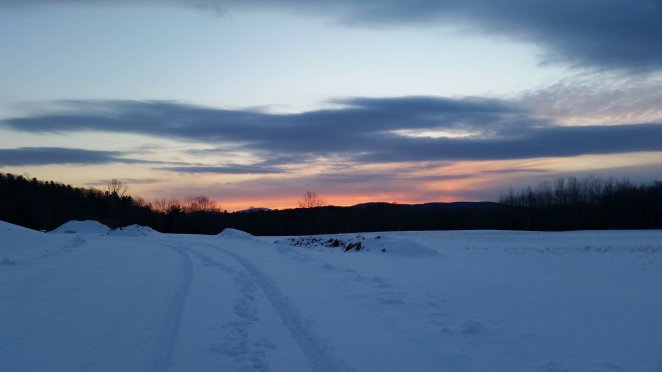
I am surprised when the orange-pink-purple of the sunset takes me.

It takes me from behind the trees,

so I chase it down to open plain.

Suddenly the counting is not scarcity;

the race is not against the sun but with it,

even though when I arrive to where the trees recede

the colors have begun to fade too.

There is no sadness here.

There is only the joy of a sudden abundance,

a sudden reality–

pennies and degrees and sweaters and seconds aside

I run. There is something greater here.

I desire mercy, not sacrifice.

For now the numbers stop ticking; engines, Fitbits and credit cards freeze,

and the lie of Utilitarianism is unmasked in a sea of clouds and wind.

I did not buy the gas to take the shortest possible route between every two points

(even guilt does not erase global warming);

I do not dash from building to next warm building just to keep running;

I cannot hold onto my life even by holding my breath in the icy air.

I love it when systems collapse and mercy reigns. The Son of Man is still lord of the sabbath.

At that time Jesus went through the cornfields on the sabbath; his disciples were hungry, and they began to pluck heads of grain and to eat. When the Pharisees saw it, they said to him, ‘Look, your disciples are doing what is not lawful to do on the sabbath.’ He said to them, ‘Have you not read what David did when he and his companions were hungry? He entered the house of God and ate the bread of the Presence, which it was not lawful for him or his companions to eat, but only for the priests. Or have you not read in the law that on the sabbath the priests in the temple break the sabbath and yet are guiltless? I tell you, something greater than the temple is here. But if you had known what this means, “I desire mercy and not sacrifice”, you would not have condemned the guiltless. For the Son of Man is lord of the sabbath.’

(Matthew 12: 1-8)


I’m back in Western Massachusetts, as this post suggests. I’m digesting the time I had in France with the Chemin Neuf Community; I’m resting; I’m looking for the next opportunity. In due time, I may post more reflections on my time at Hautecombe Abbey. For now, have a blessed Lent…a season of not just sacrifice, but mercy. Peace.

Crossing bridges

Crossing the Charles River in Boston this Wednesday, I am suddenly filled with gratitude for my year in Lambeth Palace, in the Community of St Anselm.

Maybe it’s because my morning run in London often included two bridges over the Thames. This experience, this unexpected run across the Charles in search of a CVS, feels strangely similar.

Maybe it’s because I’m kind of in the middle of an appointment to submit my application for a visa to France, to live in another intentional community next year. In many ways, my journey toward France is a continuation of my experience in CoSA (Community of St Anselm).

Or maybe it’s just that, the clouds and the blue and the river beside me, I’m reminded once again of the love and provision of a God I’ve gotten to know more deeply and love more dearly during my ten months in the Community of St Anselm.

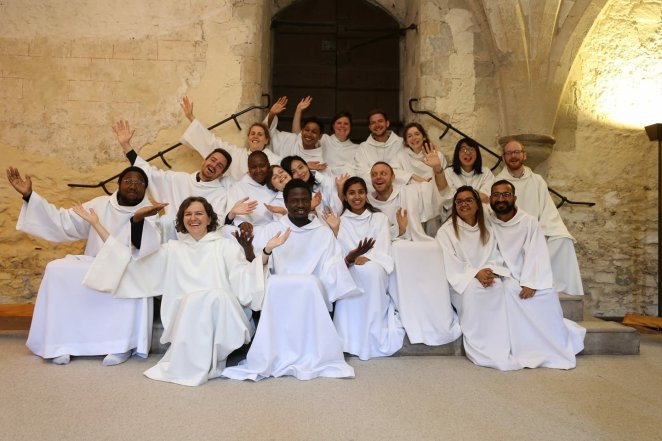
Here we are at the end of the year in CoSA, resident members and leadership team together. This is the prayer space we spent most of our time in, the Crypt.

As I drove into Boston an hour before this eventful run across the river with old passports and tax documents in hand, I had been struck by the beauty of the river. I wished I’d have a chance to walk beside it when the appointment was over. But when I realized where my appointment was, the eighteenth floor of a huge building complex, I doubted that would happen.

God answered my little unspoken prayer to be by the water– when, in the midst of the appointment, I was told that the proportion of my head to the frame of the little photo for my application was incorrect. I’d need to find a pharmacy, get the photo retaken, and return to the center.

There was no chance I would take my car out of the safety of the parking garage and back out onto the streets of Cambridge, only to never find a parking space again…so I ended up jogging across the Charles, happily confused about this turn of events, heading toward the nearest possible CVS that took photos for visas.

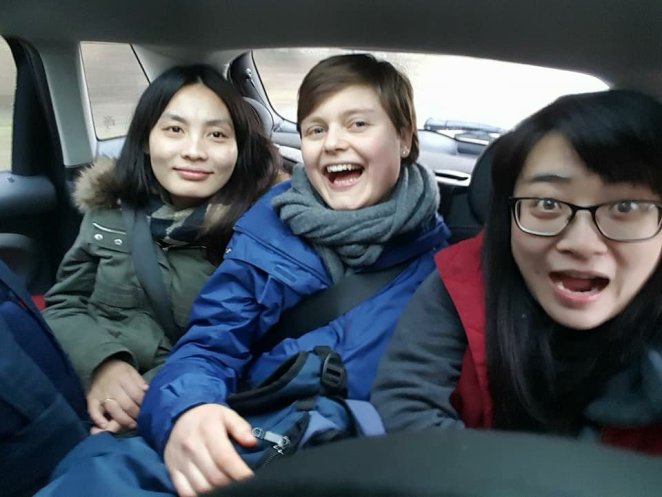
I’m with Esther and Tollin in this picture, two of my sisters in CoSA, during our week of mission in Thanet.

I admit that I’ve been terrible about blogging on my experiences in CoSA. I apologize to anyone who was hoping to follow my year– I fell off the edge of the WordPress world. I have been home now for over 5 weeks, and terribly lazy about sharing online about my experiences.

At a certain point during the 10-month journey of CoSA, the tangible reality of daily life became a focal point for me, in a way that I struggled to share on a platform like this. I couldn’t quite share about my relationships in community when they’re so complex and beautiful and fruitful and challenging at the same time. My deep though often unspoken experiences at L’Arche were also difficult to share verbally. My 30-day silent retreat remains in many ways a mystery to me. And my thoughts on God, on theology? Intertwined with the ebb and flow and gift of daily life.

There are simple things that God showed me:

his love, his presence, his mercy, his gentleness, his faithfulness,

his way of working in my heart through the words of those around me,

the ‘smallness’ of vocation, of giving what is most precious and vulnerable,

the poverty, the littleness, in which God meets us, in the person of Jesus.

the importance of praise, of song.

God weaving these gifts into my life is a work in progress. Seeing this happen in CoSA, feeling the seeds planted and the tension and gratitude of the ensuing growth, made me want more. And I was offered the opportunity to spend next year in Hautecombe Abbey with the Chemin Neuf Community, as a helper. So, God-willing, provided my visa comes through, that’s the plan!

Archbishop Justin presiding over Eucharist in the Crypt.

I had the opportunity to preach a sermon two Sundays ago at the Monterey UCC. I’m attaching a link below, if you’re curious to read it. It’s about the giftedness at the heart of all things, and how God showed me this over the past year living in community. As Jean Vanier, founder of the L’Arche communities, writes about extensively, it’s about welcoming our own “spiritual poverty.” After all, in Matthew 5:3, as Jesus launches into the beatitudes, the first is:

“Blessed are the poor in spirit, for theirs is the kingdom of heaven.”

God has blessed me so richly through my new brothers and sisters in CoSA this year. And he has met me and loved me in my poverty of spirit. I have met the God who does not shy away from our fears and frustrations but comes close and heals.

Peace and blessings be with you. I’ve included a link to my fundraiser for my year in Hautecombe, and I’ll update this page on my journey to France!

Here’s the sermon:

//e.issuu.com/embed.html#29264251/63774854

Here’s the gofundme:

https://www.gofundme.com/send-gabi-to-hautecombe-abbey

The Shape of Hope

I just returned from a week-long mission in Thanet, a coastal area in Southeast England. Our community spent Holy Week there, getting involved in local church services and events, meeting people, and sharing in daily life. Being in a more rural area– in that sense, closer to my home context of the Berkshires– gave me the chance to reflect on the meaning of Christian hope.

Throughout my week in Thanet, I was surrounded by vicars who were passionate about their communities and churchgoers who headed up amazing projects, from ecumenical services to children’s ministry programs. But I experienced a deep sadness that I attribute to the broader community atmosphere in which we were situated. Though I rarely had a chance to feel isolated during the week, I knew there were folks living in close proximity for whom the message of the Gospel doesn’t seem possible, relevant, or perhaps even meaningful in any way. I also felt that there were people in the church who may struggle to have a sense of hope, who may not be able yet to see how Jesus’ resurrection means something tangible for them. It’s a great story and a good excuse to have sweets, but the empty tomb isn’t always a straightforward experience of joy.

What kind of hope does the resurrection of Jesus bring when it follows directly from his acceptance of the cross? What kind of hope is it to say that God probably won’t deliver us from all our suffering immediately, but he wants to share in it with us?

I was struck on Easter morning in Canterbury Cathedral by John’s account of Jesus’ resurrection. In particular, I was moved by the encounter that Mary Magdalene has with her risen Lord.

“But Mary stood weeping outside the tomb. As she wept, she bent over to look into the tomb; and she saw two angels in white, sitting where the body of Jesus had been lying, one at the head and the other at the feet. They said to her, ‘Woman, why are you weeping?’ She said to them, ‘They have taken away my Lord, and I do not know where they have laid him.’ When she had said this, she turned round and saw Jesus standing there, but she did not know that it was Jesus. Jesus said to her, ‘Woman, why are you weeping? For whom are you looking?’ Supposing him to be the gardener, she said to him, ‘Sir, if you have carried him away, tell me where you have laid him, and I will take him away.’ Jesus said to her, ‘Mary!’ She turned and said to him in Hebrew, ‘Rabbouni!’ (which means Teacher). Jesus said to her, ‘Do not hold on to me, because I have not yet ascended to the Father. But go to my brothers and say to them, “I am ascending to my Father and your Father, to my God and your God.”‘ Mary Magdalene went and announced to the disciples, ‘I have seen the Lord’; and she told them that he had said these things to her.”

John 20: 11-18

At the start of this passage, Mary doesn’t have much hope that Jesus could have risen. As I heard in a sermon recently, it’s not yet a possibility for her that Jesus is the one standing there, talking to her. She is not grieving because she’s actively hoping he’s alive; she seems to be grieving because there’s an uncomfortable uncertainty about where his body is.

What I take from Mary in this story is that no matter how empty or hopeless she feels, she keeps looking for Jesus. But finally, it is his initiative of searching for her that opens her to deeper joy than being able to find the body of her Lord or to “hold on” to him. He emboldens her to keep walking in a world of uncertainty, a world where we may not recognize Jesus at first but we have to keep searching, and keep trusting that he is ever searching to show us a deeper joy than we feel is possible.

So this Easter, as I felt confusion and emptiness around me, I met Mary Magdalene outside of the empty tomb. I took solace in knowing that I had a kinship with this woman who, though already a devoted follower of Jesus, needed a new conversion this Easter morning. I walked alongside this Mary who neither ignores nor succumbs to her pain, but allows it to bring her back to the Jesus who was crucified. And with her, peering into the tomb, I wait for the new hope that God will show me on my journey. I take courage in the fact that our projects of what hope could look like– finding the body of Jesus, for example– often pale in comparison to the hope God offers. It’s not an abstract hope, but a hope that requires meeting Jesus exactly where we are, for exactly who we are. The familiarity of Jesus calling Mary by her own name, but in that, renaming her hope, is something to sit with.

Tomorrow I leave for my 30 day silent retreat, a time to sink deeper into praying with the life of Jesus. I have no clue what I’ll come out with on the other side, but I appreciate your thoughts and prayers. I’m grateful to God for my journey so far, and pray that he reveals more and more the unexpected shape of hope.

At the Cross

Today is the fifth Sunday of Lent, a season of watching and waiting. This Lent is about patience for me in quite a few ways. As a community, this period between the end of January and end of March is the longest time that we spend living at Lambeth Palace without a week-long retreat elsewhere. We watch and wait as we get to know each other better, with all the opportunities for difficulty, reconciliation, and joy that this entails.

Many of my prayers in this desert time of Lent return to the cross. Time and again I’m led here, to the silent truths that God shows me through Jesus’ passion. There is always something more to discover in this mystery of Jesus entering into the deepest suffering to reveal God’s love for us. Here are some of the points I’ve meditated on in the silences this Lent. I’ll share these thoughts from my journey with you:

The cross is God’s sign of love for the world. Sometimes we look for a sign of the might and power of God, something that would almost demand us to believe. But Jesus doesn’t defend or demand on the cross. He can only love into that silence of suffering.


God’s justice is mercy. God’s mercy is justice. The cross is where truth and love are inseparable. And our role in God’s kingdom is to welcome this mercy and learn to live in it. If we don’t recognize God in our own poverty of spirit, and in those who hunger and thirst around us, we fail to meet the God who is long-suffering.


To know the cross, driven into the ground, as Jesus’ unmovable love for us. To know its beams as pure light that search out and penetrate everything in our world, especially those things that appear most hidden in the darkness of shame and confusion. To have the freedom to draw close to Jesus on the cross, not out of any compulsion or ability to make him love us, but to choose to be with him in his suffering, our suffering, the suffering of all God’s children. To know that in the cross Jesus shows us the greatest freedom: the freedom of choosing to love rather than accuse.


I have found what I was looking for.

I thought it was a certainty of direction-

Maybe the right relationship,

The adequate strength to be myself,

A control over my comings and goings,

An understanding of my dreams,

The stamina for a never-ending adventure.

But no,

I have found the cross of Christ,

Where there is perfect liberation in God’s will,

And a perfect freedom born of Love.

When our little salvation projects fail,

We surrender to the justice of God,

Which is none other than Mercy.


God does not look down on our life to judge it-

He looks up at us as a child,

He walks beside us as a companion,

He looks down at us from the cross,

In all of these, giving love and needing love, freely.


“And I, when I am lifted up from the earth, will draw all people to myself.” -Jesus, from John 12:32

I had the experience this Friday night of a Taize prayer around the cross at a church in central London. It is always powerful for me to come to the cross and witness so many others making this pilgrimage up the aisle to be drawn once again to the hands and feet of Jesus. We touch his wounds and he touches ours.

Lent can be a tiring time, a spiritually dry time. What I’m learning through the cross is, bit by bit, the call to welcome this season of waiting as it is. The call to have faith not out of strength but in weakness. To choose love when I don’t see how I can.

Light of the World

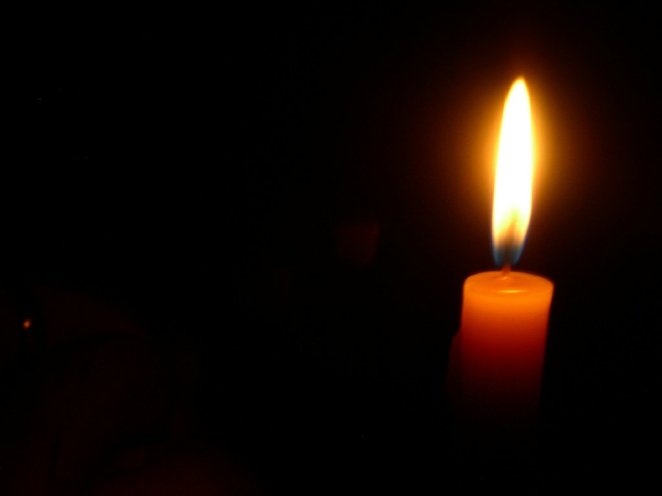
On Thursday nights, I eat dinner with one of the houses in the L’Arche London Community. Recently, I’ve started helping to facilitate prayer before dinner. “Helping to facilitate” might even be a bit generous for my role– really, one of the women who lives in the home, “Ellen,” leads. I just help light the candles, and ask Ellen to start the Lord’s prayer and the songs. These ten or so minutes of prayer are becoming one of the most precious moments in my week.

“I am the light of the world. Whoever follows me will never walk in darkness but will have the light of life.” ~John 8:12

As I prepared for prayer today, I thought about what is important to Ellen. For prayers, she always loves to have her cross, her incense, and her candle. As I prayed earlier this morning in preparation for the prayer this evening, Jesus as the “light of the world” came to me, and so did Ellen’s candle.

Ellen is blind. I’ve always known this about her in a logical sense, but the first time it clicked in a deeper way was about a month ago. I saw her heading into the bathroom, and it hit me that she didn’t turn the light on before closing the door. It finally registered for me that the light makes no difference for her.

She is blind, but she can touch the wood of her cross, smell the fragrance of her incense, and feel the warmth of her candle. I thought about this light, the light of her candle, a light that to her represents the light of Jesus. She can’t just see it and keep a distance from it. She has to come close to feel that the light is there.

Perhaps sometimes we are too lukewarm in our relationship with the Light of the World. We think we can see his light in our logical mind’s eye. But if we do not come close to Jesus, to feel his fire in our hearts, then perhaps we are missing something. Even when everything around us looks dark, when we cannot perceive where the light of God is, we can draw close to feel the essence of his light within us. Right where we are.

Sometimes we are looking for a certain sign of God’s presence that we can analyze from far-off. We want to decide, from a safe distance, that we can trust God. But I believe that God often doesn’t work this way. What I’m experiencing this year is that often the sign of God happens within the comings and goings of daily life. Often the sign is simply love, a love that we have to come close to and open our hearts to in order to experience. Like particles whose motion changes when observed, we can’t come to know God without being changed ourselves. Instead of safe distance, we’re invited into relationship, which of course comes with risk. The risk that being loved will fundamentally change our lives.


We began tonight in the living room, in darkness, with the smell of Ellen’s incense, her cross, and her candle. We held hands for the Lord’s Prayer. Ellen led us in a song from Taize. And then I talked a bit about the Light of the World, coming close to it to not just see it, but feel it.

“Who wants to feel the warmth of the candle?” I asked. My plan was to pass it quickly around the circle, come up with some other reflection on the spot, and then invite everyone to offer their prayers aloud.

But my plans were subverted when the first person who took the candle in his hands to feel its warmth just looked at it intently, and began his prayer.

I guess we’re already there, I mused. There was no need for extra Bible verses or philosophical reflections. The simple truth of God with us was already recognized, in the light of the candle, and in the hearts of everybody there. And so tonight I thank God, once again, for L’Arche, for my friendships there, and for this year in God’s time.